
Monday June 08th 2026
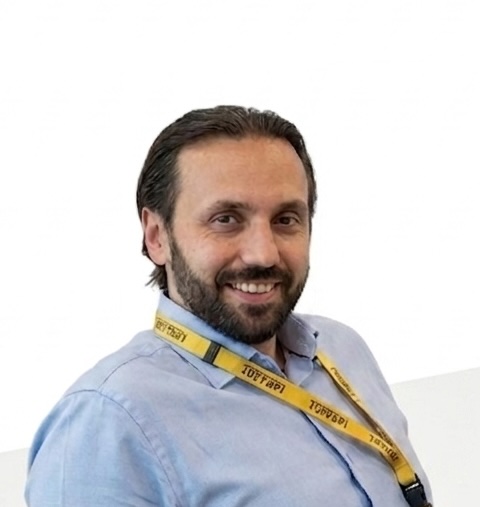
Giovanni Lo Calzo, Ferrari
Short Bio: Giovanni Lo Calzo received the Master’s degree with hons and the PhD degree from the University of ROMA TRE, Rome, Italy, respectively in 2010 and 2015. Between 2010 and 2011, he served as a Research Assistant at University of Roma Tre. In 2015, he joined the Power Electronics, Machine and Control (PEMC) Group at the University of Nottingham, UK, as a Research Fellow. There, he specialized in the modeling, design, and control of power electronics converters, as well as the development of high TRL industrial prototypes. In 2017, Giovanni transitioned to the industry, joining Dyson Ltd to contribute to their innovative electric vehicle (EV) development program. Since 2018, he is with Ferrari Spa, where he leads the team responsible for the hardware design of power electronics components for xEV cars. Giovanni has authored and co-authored over thirty publications in international journals and conference proceedings, and he holds 10 patents related to power electronics converters and methodologies applied to the automotive sector.
Title: Electrified powertrains: opportunities, challenges, methodologies
Electrified powertrains (PHEV and BEV) are part of Ferrari’s recent past and have been introduced alongside the traditional powertrains based on internal combustion engines with two aims: product diversification and performance enhancement. Beginning in 2009 with the introduction of the Kinetic Energy Recovery System (KERS) in Formula 1, Ferrari has progressively advanced its electrification strategy, achieving significant milestones shared during the Capital Markets Day 2025 and culminated in the release of the iconic F80 in 2024 and the presentation to the public of their first full electric model LUCE in 2026. The integration of new mechanical solutions for chassis, adherence to updated and more stringent homologation standards such as WLTP and CLTC, and the incorporation of advanced functionalities required the development of enhanced methodologies. Design processes transitioned from systems integration to holistic systems design, ensuring the optimization of each component for overall system performance rather than local optima. This seminar will address the challenges faced during this transition and the opportunities unlocked by electrified powertrains, giving an overview of the methodologies Ferrari has adopted to navigate the complex landscape of electrification.

CHEN Jiayu, Li Auto Germany R&D Center GmbH
Short Bio: Jiayu has 10 years of professional experience in the new energy vehicle industry and currently serves as Electric Drive Manager at Li Auto’s Germany R&D Center, where he is responsible for the development of innovative electric drive technologies as well as platform planning for Li Auto’s electric drive products
Title: A Systematic Engineering Approach to Electric Drive Efficiency
This study explores high-efficiency design methods for NEV electric drive systems. Unlike traditional component-focused approaches, we optimize performance from user value and full-vehicle operating scenarios. Range anxiety and scenario-dependent performance are major consumer concerns. Since electric drive efficiency directly affects real-world range, improving multi-scenario efficiency is critical to user experience. We adopt a system-level solution covering power electronics, semiconductors, materials, processes, and software algorithms. By modeling vehicle operating conditions and key component losses, we significantly optimize electric drive efficiency. As a result, Li Auto’s electric drive achieves a market-leading efficiency of 93%, with reduced efficiency degradation at high speeds and low temperatures, greatly improving overall vehicle performance.

David Deurell
Short Bio: David Deurell received the M.Sc. degree in electric power engineering with a focus on electric machine design from Chalmers University of Technology, Göteborg, Sweden, in 2019. His master’s thesis, titled “FEA Study of Proximity Effect in Hairpin Windings of a PMSM for Automotive Applications,” focused on finite-element analysis of proximity effects and AC losses in PMSM. Since 2019, he has been with Aros Electronics AB, where he has been involved in development of electric motors. He is currently Team Leader for motor development, leading work covering the full development scope, including electromagnetic design, material selection, manufacturing processes, and production.
Title: Development and Validation of Rare-earth Free Auxiliary Electric Machine for Heavy Vehicles
Rare-earth-free machine technologies are gaining attention for sustainable and cost-effective electric drive solutions. An Interior Permanent Magnet (IPM) machine using ferrite magnets is a promising option for auxiliary applications such as compressors in vehicles. Ferrite magnets are abundant and inexpensive compared to rare-earth magnets. The IPM rotor embeds ferrite magnets and utilizes reluctance torque alongside magnet torque to improve efficiency. Although ferrite magnets have lower flux density, optimized rotor geometry and flux barriers help compensate. Challenges include susceptibility to demagnetization under different temperatures and strong armature reactions, requiring advanced rotor design, thermal management, and control strategies. IPM machines with ferrite magnets deliver good performance at moderate speeds, making them suitable where compactness and efficiency matter more than extreme torque density. Another rare-earth-free alternative is the Externally Excited Synchronous Machine (EESM), which eliminates permanent magnets entirely by using an electrically excited rotor winding. EESMs offer full control of rotor flux and avoid rare-earth dependency but require slip rings or brushless excitation systems, adding complexity. They provide high efficiency and torque capability, making them ideal for traction and auxiliary applications prioritizing sustainability and supply chain resilience.
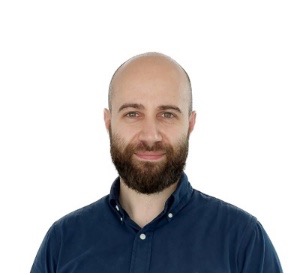
Luca Ianni, AVL Italia Spa
Short Bio: Luca Ianni is R&D Project Manager at AVL Italia, with responsibility for innovation projects and R&D activities related to vehicle electrification and sustainable mobility. His role includes the coordination and technical oversight of advanced development work on high-voltage battery systems, electric powertrain technologies and future-oriented mobility solutions. He contributes to national and European collaborative programmes, supporting the connection between engineering activities, innovation strategy and project execution.
Title: Sustainable Electric Drivetrains: Efficiency, Materials and Circularity
This seminar discusses how sustainability can be addressed in electric drivetrain engineering beyond the simplified idea of “zero tailpipe emissions”. Starting from a lifecycle perspective, the lecture will examine three key dimensions: production, use phase and end of life. The talk will show how system-level engineering decisions influence drivetrain efficiency, energy consumption, material use and overall product carbon footprint. Industrial examples from AVL development activities will be used to illustrate how high-efficiency electric drive units, high-speed drivetrain concepts and material choices can contribute to more sustainable solutions. Particular attention will be given to the relationship between performance, packaging, efficiency and resource use, as well as to the potential impact of recycled materials on traction motor CO2e emissions. The objective is to provide students with a practical engineering view of sustainable electric drivetrain design, linking technical choices to broader environmental and industrial implications
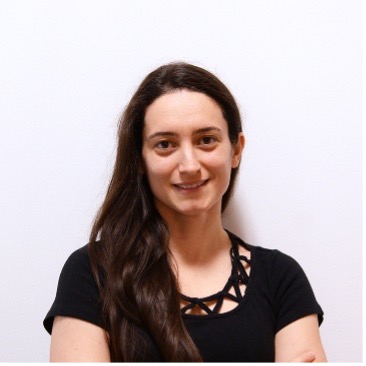
Agnese Castellani, Spin Applicazioni Magnetiche SRL
Short Bio: I’ve been working in Spin for three years in the R&D department where I deal with coding, software development and artificial intelligence. With a passion for innovative solutions, Python is my daily language. Mostly, I focus on projects for customers in the automotive and industrial sectors. Everyday, I face Italian and international customers on large-scale projects. The work with 15 highly specialized engineers in several sectors helps me improve the overall vision on specific projects.
Title: Computations tools with AI and Data Analytics for electric motors: pre-design, optimization and cost analysis
Nowadays, artificial intelligence and data analytics are transforming the industrial world at both engineering and production level. In this workshop I will present several case studies where AI has been applied to electric motors. In particular, with these case studies I will focus on the main step of the typical workflow: pre-design/design, optimization, cost analysis and production.These tools help reduce the simulation time from one side and improve company efficiency and productivity
Tuesday June 09th 2026
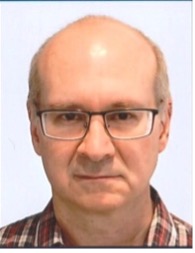
Sebastian Rosado, AVL Germany
Short Bio: Sebastian Rosado is a Senior Power Electronics Engineer in AVL/Regensburg, Germany. He studied Electrical Engineering in Argentina, and later graduated with Masters, and PhD degrees from Virginia Tech, USA. He has more than 25 years of industrial experience in various domains, with the last 5 years working on automotive power electronics.
Title: Process of Design of a DC-DC converter for LV battery charge for Electric Vehicle
This presentation will cover the workflow followed on the design of a High- to Low-voltage (HV to LV), DC-DC converter for charging the low-voltage battery in an electric vehicle. The process starts with the trade-off and selection of the power converter topology that can meet the operation and performance requirements. It follows with the sizing and selection of the main components defining the power stage, like power semiconductors, and passives. Focus will be placed on the mathematical models and simulation tools used along the design process from an industrial viewpoint. Additionally, the challenges created by a very large input/output voltage range and ratio will be addressed together with solutions that enable an efficient power operation under the specified conditions. For this, the commutation of the power semiconductors will be analysed as well as the conditions where zero voltage switching (ZVS) in a phase-shifted full-bridge circuit can be achieved. Means to reduce overvoltage stress on the LV side semiconductors will also be discussed. The presentation will include experimental results supporting the main findings and conclusions.

Sergio Busquets-Monge, Universitat Politècnica de Catalunya
Short Bio: Sergio Busquets-Monge received the M.S. degree in electrical engineering and the Ph.D. degree in electronic engineering from the Universitat Politècnica de Catalunya (UPC), Barcelona, Spain, in 1999 and 2006, respectively, and the M.S. degree in electrical engineering from Virginia Polytechnic Institute and State University, Blacksburg, VA, USA, in 2001. From 2001 to 2002, he was with Crown Audio, Inc. In 2005, he was awarded an Assistant Professor position with the Electronic Engineering Department, UPC. He was promoted to Associate Professor in 2007. Since 2023, he is Full Professor. In 2009, he was a Visiting Scholar at the Center for Power Electronics Systems, VPI&SU, VA, USA, and the Institute of Energy Technology, Aalborg University, Denmark. He has published more than 100 journal and conference papers in the fields of power electronics and industrial electronics. His current research interests include modular and scalable power converter design based on multilevel neutral-point-clamped topologies and electric vehicles.
Title: Fundamentals of multilevel neutral-point-clamped power conversion and its application to the design of modular and scalable power converters for electric vehicles.
Advances in power electronics will play a fundamental role in achieving the technological objectives that society pursues in terms of sustainable transport. Multilevel neutral-point-clamped (NPC) conversion technology enables a simple modular and scalable design of all types of power converters (dc-dc, dc-ac, ac-ac), with higher power density, improved performance features, and system-level benefits, compared to conventional systems. Their use is widely spreading through many applications, and it is important to learn the basics of this technology. The first part of this lecture will cover an introduction to NPC power converters: functional diagram, leg topologies, leg switching states, converter switching states and associated space vector diagram, basic control strategies, the dc-link capacitor voltage balance issue, and typical applications. Subsequently, virtual vector modulations, which guarantee capacitor voltage balance in all operating conditions, will be presented for the dc-ac conversion case, with any number of levels and phases. The second part of the lecture will present the modular and scalable architecture to design EV power conversion systems, based on multilevel NPC conversion, developed in the Horizon Europe project SCAPE. The application of this architecture to the design of power converters of different vehicles will be discussed, together with its challenges and design trade-offs.
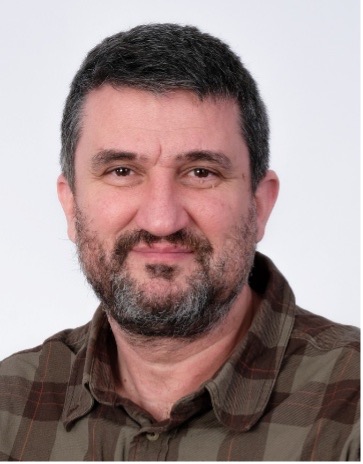
Dr. Xavier Jordà, Institute of Microelectronics of Barcelona, IMB-CNM(CSIC)
Short Bio: Xavier Jordà obtained the Bsc degree in Physics at UAB (Barcelona, Spain) in 1990 and the PhD degree at INSA – Lyon (France) in 1995. There, he joined the CEGELY-ECPA lab (nowadays Ampere Lab) on vector control of three-phase induction motors, pulse width modulation (PWM) techniques and the design and realization of power inverters for electric vehicles. In 1995 he joined the Power Devices and Systems (PDS) Group of IMB-CNM (CSIC) (Barcelona, Spain), obtaining a permanent position as Tenured Scientist in 2005, and a Scientific Researcher position in 2021. Thanks to the experience acquired in France, he led the creation of a new research line on Power Systems Integration. Since 2000, he is the responsible of the power devices characterization lab of IMB-CNM, from 2012 to 2021 he was the head of the PDS Group and from 2021 to 2025 he was Deputy Director of IMB-CNM. He co-authored more than 110 journal articles, 125 international conference contributions, 13 patents and has supervised 5 PhD thesis (plus 3 more ongoing). He has participated in 25 national projects (leading 9 of them), 19 European projects (leading 3 of them at IMB-CNM) and 42 industrial contracts (leading 32 of them). Dr. Jordà current research activity focuses on power packaging techniques for high temperature and smart power systems integration, thermal management, modelling and characterization of power devices and systems.
Title: Chip‑Embedding as a Technological Approach for Improved Integration of WBG Devices in EV Converters
In the context of the current climate emergency, electrification based on renewable energy sources represents one of the most effective pathways for the energy transition, particularly in sectors such as transportation. Technologies that enhance the efficiency and performance of power converters used in electric vehicles therefore hold significant potential for achieving large‑scale energy savings worldwide. The power stage of these converters relies on semiconductor devices, typically implemented in multichip modules, which are responsible for processing electrical energy under high voltage and current conditions. For decades, the fundamental manufacturing approaches for power modules have remained largely unchanged. However, the emergence of wide band‑gap (WBG) semiconductor devices, such as silicon carbide (SiC) and gallium nitride (GaN), has introduced new performance opportunities compared with conventional silicon technology. Exploiting these advantages requires innovative packaging concepts that reduce parasitic elements—particularly inductance—and improve thermal management. Among the advanced packaging solutions currently under investigation, chip‑embedding (CE) technology enables the integration of bare semiconductor dies directly within the multilayer structure of printed circuit boards (PCBs). Electrical interconnection between the copper traces and the embedded devices is achieved using standard micro‑via processes. Beyond allowing the integration of control circuits and power stages within a single PCB, CE technology improves compactness, reduces parasitic effects, lowers manufacturing costs, and simplifies end‑of‑life recycling. As a result, CE is a rapidly developing research area worldwide. This lecture reviews the main manufacturing and characterization aspects of CE technology and presents its application to the modular and scalable high‑voltage switching cells developed within the HE SAPE project.
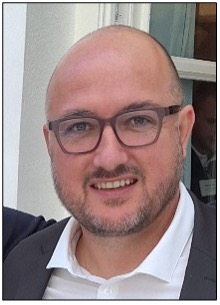
Philippe LASSERRE, DEEP Concept
Short Bio: CEO and co-funder of DEEP Concept, Expert in power module packaging technologies. Employed in ALSTOM as a research engineer during 11 years, then Technical Director of PRIMES platform during 5 years (French Research center).
Title: Power module packaging, how to adapt the best technology to the need of the client?
Power module packaging plays a crucial role in determining the performance, reliability, and cost-effectiveness of power electronic systems. Choosing the best packaging technology requires a deep understanding of the client’s application, environment, and performance requirements. Every industry has unique constraints such as thermal management, voltage levels, power density, and mechanical robustness. The first step is to define the key priorities: is efficiency more critical than cost? Are size and weight major limitations? Once these needs are clear, engineers can select materials and topologies that best fit the project. For instance, high-power automotive inverters may benefit from silicon carbide (SiC) modules with advanced ceramic substrates and double-sided cooling or PCB embedded technology for a cost effective solution, while renewable applications may prioritize ease of integration and long lifetime under thermal cycling.
Customization is essential: packaging design should balance electrical, thermal, and mechanical performance, optimizing interconnections, insulation, and heat dissipation. Emerging technologies such as PCB embedded technology also offer new paths to enhance density. Ultimately, adapting the best packaging technology means aligning innovation with practicality—providing the client with a tailored, future-proof solution that maximizes efficiency and durability without compromising manufacturability or cost.
Wednesday, June 10th 2026
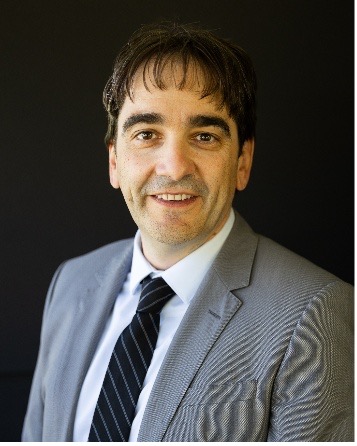
Andrea Vacca, Maha Fluid Power Faculty Chair, Purdue University
Short Bio: Andrea Vacca is the director of the Maha Fluid Power Research Center, the largest academic center dedicated to fluid power research in the United States. His research focuses on several aspects of hydraulic control technology including new concepts to perform electro-hydraulic actuations, new component designs, electrification of fluid power systems, and reduction of noise emissions from hydraulic components. Dr. Vacca holds 26 patents/patent applications and he is author of more than 200 technical papers, and of the textbook “Hydraulic Fluid Power”. He is the Editor in Chief of the International Journal of Fluid Power, member of the board of directors of the Global Fluid Power Society and a former chair of the Fluid Power related divisions of the Society of Automotive Engineers (SAE) and of the American Society of Mechanical Engineers (ASME). In 2019, Andrea Vacca was awarded the 2019 Joseph Bramah Medal from the Institution of Mechanical Engineers for his contributions to “global fluid power research, particularly related to gear pumps”. Andrea Vacca is an ASME fellow, and in 2025 he was inducted in the “Fluid Power Hall of Fame” by the International Fluid Power Society. Andrea Vacca completed his Master’s degree in Mechanical Engineering from the University of Parma, Italy (Laurea cum laude) and his Doctoral degree in Energy Systems from the University of Florence, Italy.
Title: Electrifying the work functions of off-road vehicles: challenges and research directions
Vehicle electrification is a trend largely affecting the development of the next generation of off-road vehicles (ORVs), in agriculture, construction, forestry, mining, etc. One significant challenge for electrified ORVs pertains to the low energy efficiency of conventional actuation systems used for the propulsion and the working functions, which negatively affects the size for the battery system necessary to meet typical application requirements. Therefore, there is a large opportunity for developing new solutions to address the low-efficiency limitations of current state-of-the-art. This lecture will illustrate the recent developments for high-efficient, actuation technologies suitable for ORVs. Starting from advanced hydraulic architectures, which can retain typical advantages of hydraulics, the lectures will compare best-in-class electric actuation versus hydraulic actuations, to highlighting the pros and cons of each technology, with respect to efficiency, compactness, robustness, and cost. Opportunities for technology integration, with specific examples from research performed at Purdue University, will also be presented. In particular, simulation and experimental activities to develop so called integrated e-Pumps and electro-hydraulic-actuators will be illustrated.

Luca Posca, technical service director, LATI Industria Termoplastici
Short Bio: Luca Posca holds degree in chemical engineering with a specialization in polymer materials. Since 2000, he has been working at LATI in the areas of technical customer support, co-design using FEM-CAE tools, materials and market development. Today, Luca is also involved in marketing and handle communication as well as technical training both within and outside the company, with the aim of promoting a culture of technical thermoplastic compounds
Title: Self-extinguishing plastic materials for the new concept of electric mobility
From internal combustion engines to e-mobility: plastics remain key to the solutions needed for the transition. LATI is rethinking its technical compounds to address the industry’s design challenges, collaborating on the introduction of structural, conductive, and self-extinguishing plastic materials into the new concept of electric mobility.
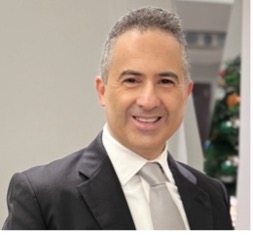
Giacomo Scelba, University of Catania, Italy
Short Bio: Giacomo Scelba received the Ph.D. degree in Electrical Engineering from the University of Catania, Italy, where he is currently Associate Professor of Power Electronic Converters, Electrical Machines, and Drives in the Department of Electrical, Electronic and Computer Engineering. His research activities focus on the modeling, control, and design of high-performance and reliable electric drives, with particular emphasis on electric mobility, industrial automation, and energy conversion systems. More recently, his work has been oriented toward the integration of advanced control techniques with wide-bandgap (SiC and GaN) power device technologies for high-efficiency and high-power-density motor drives. He currently serves as Associate Editor for IEEE Transactions on Power Electronics and the IEEE Journal of Emerging and Selected Topics in Power Electronics. Prof. Scelba is a Senior Member of IEEE, Chair of the IEEE Power Electronics Society Technical Committee on Electrical Machines, Drives and Automation. He is author of more than 200 scientific publications in leading international journals and conferences.
Title: Sensorless and Fault-Tolerant Electric Drives: Enabling Reliable and Efficient Motor Control Systems
Electric motors account for a significant share of worldwide electricity consumption. Consequently, even incremental improvements in efficiency, reliability, and controllability of electric drives can result in substantial energy savings and environmental benefits at a global scale. In this context, sensorless and fault-tolerant control strategies represent two key enabling solutions for the development of next-generation high-performance and highly reliable motor drive systems. The reliability of electric drives can be significantly enhanced by reducing the number of mechanical sensors, increasing system robustness, and adopting power converter topologies capable of reconfiguring their operation in the presence of faults. However, fault-tolerant operation often requires advanced control strategies together with effective fault detection, identification, and reconfiguration algorithms, which inevitably increase system complexity and demand sophisticated modeling and control solutions.This keynote will provide an overview of the most widely adopted sensorless control techniques, ranging from methods exploiting magnetic and geometric anisotropies of electrical machines to model-based approaches for rotor position and speed estimation. A comprehensive review of well-established fault-tolerant motor drive configurations for both three-phase and multiphase machines will then be presented, highlighting the main advantages, limitations, and practical implementation issues of each topology. Finally, the potential of combined sensored–sensorless methodologies will be discussed, showing how their combined use can further improve performance, reliability, and fault resilience of electric drives.
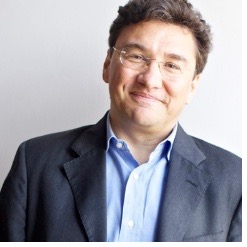
Gianluca Marchi, University of Modena and Reggio Emilia
Short Bio: Gianluca Marchi, Ph.D., is Full Professor of Business Management at the University of Modena and Reggio Emilia (Italy), where he was formerly Vice-President. He teaches in various management courses at the department of Economics Marco Biagi and at MUNER (MotorValley University Network of Emilia Romagna). Most recent studies are concerned with innovation management, in the field of industry evolution and innovation ecosystems, academic spin-offs and University-industry relationships. He has published in leading academic journals, including Research Policy, Technological Forecasting and Social Change, R&D Management, Technovation, Journal of Business Research.
Title: The electrification wave in world car industry: long-term perspective and recent trends
By adopting an economic and competitive perspective, I will examine the transformative “electrification wave” currently reshaping the global automotive industry. Driven by global climate targets, regulatory mandates, and rapid technological advancements in battery and charging infrastructure, electrification has become one of the industry’s primary strategic directions. I provide a long-term perspective on this all-but-linear transition, analyzing how annual global EV sales evolved over time and giving some insights to interepret most recent trends, including the shift in competitive dominance toward Chinese manufacturers, the slowdown in demand for pure battery electric vehicles (BEVs), and the related “go and stop” strategies of many traditional leading OEMs which recently announced readjustments and cuts in their investment plans for electrification. The complex interplay of policy, technological innovation, and consumer adoption will be finally discussed.
Thursday, June 11th 2026
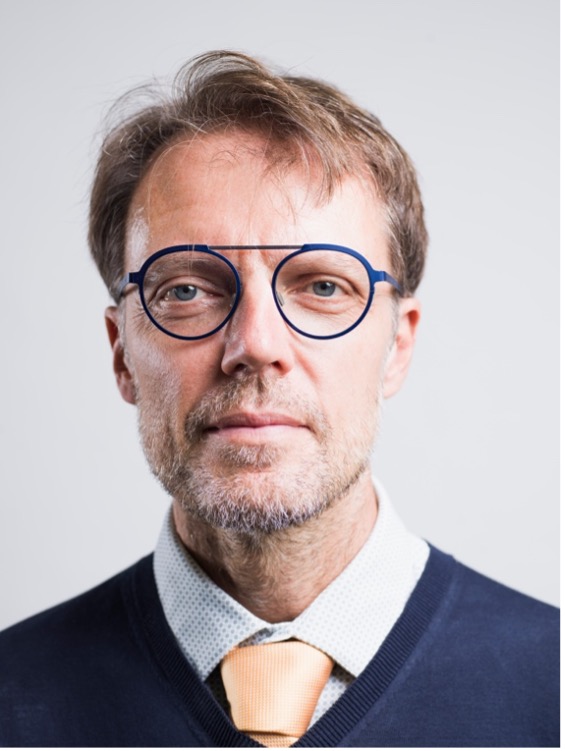
Gianmario PELLEGRINO, Politecnico di Torino
Short Bio: Gianmario Pellegrino is a professor of power converters, electrical machines and drives with the Politecnico di Torino, Turin, Italy. He was a Visiting Fellow with Aalborg University, Aalborg, Denmark, the University of Nottingham, Nottingham, U.K., and the University of Wisconsin Madison, Madison, WI, USA. He is the author of the open-source platform SyR-e for the design and simulation of electrical motors and drives, constantly developed and validated in the context of collaborations with the industry and widely adopted worldwide. Dr. Pellegrino is an IEEE Fellow and the recipient of the 8th Grand Nagamori Award in 2022. He serves as Associate Editor for IEEE Transactions on Industry Applications and is an IAS Distinguished Lecturer for years 2026/27, has 65+ IEEE journal papers, 10 patents, and 9 Best Paper Awards. He is founding member of the Power Electronics Interdepartmental Center (PEIC) of Politecnico di Torino, Member of the Advisory Board of PCIM Europe, and the Adjunct Vice Rector for Tecnology Transfer of Politecnico di Torino.
Title: Sustainable Electrical Motors for Traction
This lecture addresses rare-earth element (REE) dependency in traction motors and alternative designs focusing either on alternative Permanent Magnet materials, Electrically Excited Synchronous- and Induction- Motors. Current trends in eMotors for traction such as high-speed (30+ krpm) and direct oil cooling designs are also covered. Case studies include oil-cooled prototypes with 95% peak efficiency and hybrid FeN/NdFeB structures reducing REE use by 73% and Variable Flux Machines. To a wider extent, a trade-off study between performance and environmental impact is presented, based on a selected number of existing traction motors, evidencing that although non-one-to-one rotor replaceable, is hardly possible, the electrically-excited solution is the best non REE alternative to the current state-of-art permanent magnet motors.
Friday, June 12th 2026
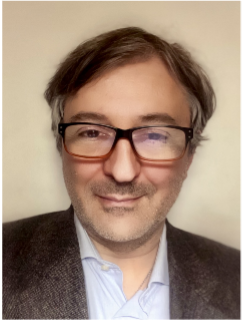
Prof. Luca Zarri, University of Bologna
Short Bio: Luca Zarri (Senior Member, IEEE) received the M. Sc. and Ph.D. degree in Electrical Engineering from the University of Bologna, Bologna, Italy, in 1998 and 2007, respectively. Currently, he is a Full Professor of power electronics, electrical machines and drives with the Department of Electrical, Electronic, and Information Engineering “Guglielmo Marconi”, University of Bologna. He has authored or coauthored more than 200 scientific papers. His research activity concerns the control of power converters and electric drives. He is a senior member of the IEEE Industry Applications, IEEE Power Electronics and IEEE Industrial Electronics Societies. Currently, he serves as the Chair for the IEEE IAS Industrial Power Conversion Systems Department.
Title: Multiphase Electric Drives
This seminar provides an overview of recent advances in multiphase electric drives, focusing on both theoretical foundations and industrial applications. After introducing the main characteristics of multiphase machines and multiphase power converters, the seminar discusses the mathematical modeling and control of systems with more than three phases. Particular attention is devoted to modulation and overmodulation techniques for multiphase converters, highlighting their impact on voltage utilization, current harmonic content, and high-speed operation. The seminar also analyzes the additional degrees of freedom offered by multiphase systems, which can be exploited for torque enhancement, harmonic current injection, multi-machine operation, and improved power sharing. Fault-tolerant control strategies are presented as a key advantage of multiphase drives, enabling continuous operation even in the presence of phase faults and increasing the reliability of safety-critical applications. Finally, the seminar reviews high-speed operation issues and discusses several industrial applications, including transportation electrification, renewable energy systems, naval propulsion, and high-power industrial drives.
Paul Mitcheson, Imperial College London
Short Bio: (Senior Member, IEEE) received the M.Eng. degree in electrical and electronic engineering and the Ph.D. degree in micropower motion-based energy harvesting for wireless sensor networks from Imperial College London, London, U.K., in 2001 and 2005, respectively. He is currently a Professor of electrical energy conversion with the Control and Power Research Group, Electrical and Electronic Engineering Department, Imperial College London. His research has been supported by European Commission, Engineering and Physical Sciences Research Council, and several companies. His research interests include energy harvesting, power electronics, and wireless power transfer to provide power to applications in circumstances where batteries and cables are not suitable. Prof. Mitcheson is a fellow of the Higher Education Academy, was the General Co-Chair of IEEE Wireless Power Week in 2019 and is currently Chair of the IEEE PELS Technical Committee on Wireless Power. He is also a founder of Bumblebee Power Ltd, a wireless power spinout from Imperial College London.
Title: Inductive Power Transfer for Mobile and Transport Applications
Wireless power is a key enabler for charging portable devices without the constraint or inconvenience of a tether. Consequently, it can be applied to many forms of electric transportation, including cars, scooters, and drones. In this seminar I will cover the fundamentals of wireless power delivery, starting with basic link modelling and optimisation. I will then cover the common techniques used in both 85 kHz systems (an SAE standard for EV charging) as well as ISM band based wireless power, typically at 6.78 MHz, and discuss the trade-offs of these two approaches. This discussion will include link compensation schemes, and the commonly used inverter and rectifier topologies. I will then discuss system ancillaries, including the ability to perform bidirectional power transfer (e.g. for V2G applications), and foreign object detection with regards to system safety and give examples that we have done at the Imperial Wireless Power Lab, as well as in our spinout company, bumblebee Power Ltd, on drones and scooter charging as well as multi kW MHz demonstratotors.