
Monday June 15th 2026
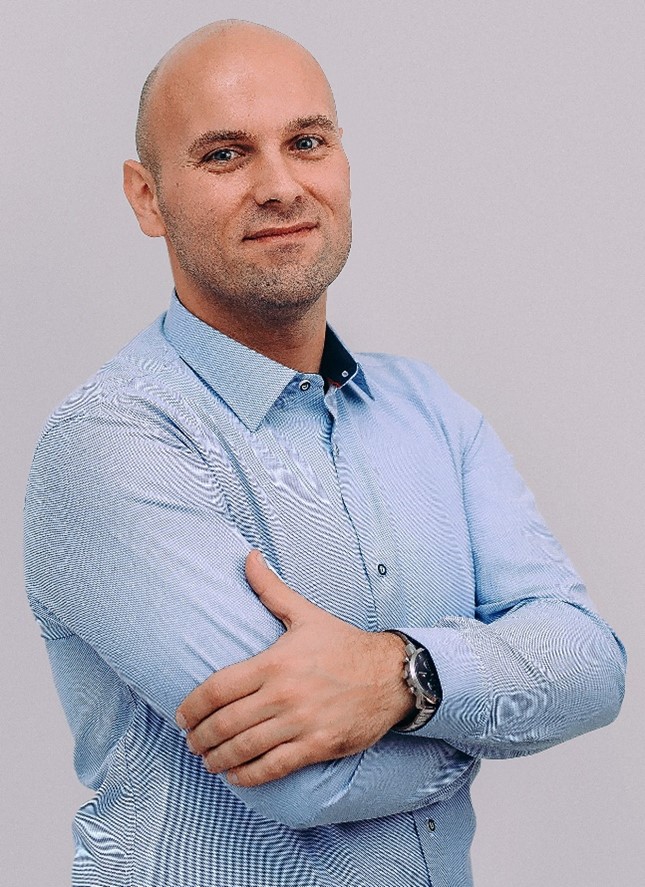
Lukasz Mierczak, Brockhaus
Short Bio: Lukasz Mierczak is the Managing Director of Brockhaus Polska, where he leads the Brockhaus Measurements team in Poland. He holds a PhD in Electrical Engineering from Cardiff University, United Kingdom. Throughout his career, he has developed strong expertise in electromagnetic design and magnetic measurement technologies. He began as a Research Assistant at the Wolfson Centre for Magnetics in Cardiff, focusing on magnetic sensors and non-destructive evaluation methods for helicopter components and rail defect detection. He then worked as a Motor Design Engineer at E-propelled, specializing in the electromagnetic and thermal design of electrical machines. From 2017 to 2023, he served as a Principal R&D Engineer at Brockhaus Measurements in Germany and Poland, contributing to the development of technologies for measuring soft and hard magnetic materials.
Title: Ferromagnetic Core Characterization and Manufacturing Effects on Electric Motor Performance

Christiane Mellak, Powersys
Short Bio: Christiane Mellak received the B.Sc degree and the Dipl.-Ing. degree in Biomedical Engineering from Graz, University of Technology, Austria, in 2015 and 2017, respectively. She joined the Electric Drives and Machines Institute at the Graz University of Technology as a Student Assistant in 2015 where she later joined the Doctoral program. She finished her Ph.D. degree in electrical engineering in 2023. Her research focused on modelling and optimization of drives for special applications in the medical field. In November 2023 she joined Powersys as electrical motor simulation engineer for the FEA software JMAG. Her main role is offering support for customers who are using JMAG technical support, workflow development and consultancy in electrical machine design.
Title: Soft magnetic material characterization in JMAG
Today engineers who working in the electrification industry (EV, Aerouspace, energy…), pushing their electrical machine design towards the highest efficiency and power to weight ratio to increase the range of the vehicle, or maximize the power generation with the given kinetic energy where the machine is intended to use. Feeding the proper material data into the simulation software is a key step for accurate results. Soft magnetic material characteristics are depend on multiple parameters including measurement capabilities (frequency and magnetic flux range of the measurement amplifier), and manufacturing processes like cutting technology and assembly process of the active and passive parts (stator/rotor core housing/shaft fixation). JMAG offers advanced material models to incorporate mechanical stress and residual strain materials during simulation. During this seminar these modelling techniques will be introduced and will be compared with measurement results.
Tuesday June 16th 2026

Zoltan Nadudvari, Powersys
Short Bio: Finished his BSc and MSc studies at the Technical University in Budapest in 2014 with a major in electrical machines and drives. He joined Siemens at 2014 started as a product developer at the Distribution Transformer Division. In 2016 he started to work with Siemens eAircraft (later Rolls-Royce Electrical) as an electrical machine design engineer. In this role he developed electrical machines for electric and hybrid electric aerospace application. He used JMAG in his daily engineering work and his main focus was multidomain simulation including power electronics effect on the electrical machine performance. In October 2024 he joined Powersys as a technical account manager of the JMAG software and his main role is offering support for customers who are using JMAG technical support, workflow development and consultancy in electrical machine design.
Title: Simulation technique to simulate power electronics effect on the electrical machine performance
Today engineers who working in the electrification industry (EV, Aerouspace, energy…), pushing their electrical drive train design towards the highest efficiency and power to weight ratio to increase the range of the vehicle or maximize the power generation with the given kinetic energy where the drive train (Power electronics and electrical machines) is intended to use. Choosing the optimum PWM modulation method and switching frequency is a key to optimize the drive train efficiency. Lower switching frequencies and DPWM modulation techniques significantly reduce the power electronics losses but have negative effect on NVH and loss performance on the electrical machine. In this seminar advanced simulation technique will be presented based on Simba system and power electronics simulation and JMAG FEA simulation and the coupling capabilities of these tools.
Wednesday, June 17th 2026

Giacomo Di Biase, Application Engineer at ESSS Italia
Short Bio: Graduated with a degree in Electrical and Mechanical Engineering from the University of Strathclyde (Glasgow), where he gained valuable experience in renewable energy production and distribution. He joined the ESSS Italia team in the autumn of 2024, focusing primarily on low-frequency electromagnetic simulations. and developing extensive expertise in electric motors, working closely with industry leaders in the sector.
Title: Ansys CFD Thermal Analysis and Workflow Optimization for Electric Motor Design
This session presents a simulation-based workflow for three-dimensional Conjugate Heat Transfer (CHT) and Computational Fluid Dynamics (CFD) thermal analysis in electric motor design. The methodology integrates rapid pre-design tools with high-fidelity 3D solvers. The workflow establishes a data pathway where an optimized configuration from Ansys Motor-CAD is transferred into Ansys Discovery and Fluent. The electric motor is modelled in MotorCAD following a 2d template approach. Firstly, the electromagnetic performance of an operating point of the machine is analysed to extract the losses on the different components. These losses will then be used to evaluate the final temperatures of the machine as well as the change of temperatures with the passing of time, where the impact of different cooling strategies will be evaluated. Secondly, the effects of the raise in temperature on the machine performance will be studied over the full machine operating range and how they affect the different operating points. Finally, the changes in the machine temperature will be studied not only for a simple operating point, but rather during a more complex duty cycle.

Alessandro Arcidiacono, Senior Application Engineer at ESSS Italia
Short Bio: Alessandro Arcidiacono, MSc in Energy Engineering, is a Senior Application Engineer specializing in Computational Fluid Dynamics (CFD), technical training, and software support. His professional background focuses on applying engineering simulation and optimization tools to industrial and research applications. With over 12 years of experience, he has an established track record of collaborating with major industrial and research partners to enhance operational efficiency and technological innovation.
Title: Ansys CFD Thermal Analysis and Workflow Optimization for Electric Motor Design
This session presents a simulation-based workflow for three-dimensional Conjugate Heat Transfer (CHT) and Computational Fluid Dynamics (CFD) thermal analysis in electric motor design. The methodology integrates rapid pre-design tools with high-fidelity 3D solvers. The workflow establishes a data pathway where an optimized configuration from Ansys Motor-CAD is transferred into Ansys Discovery and Fluent. To handle geometric complexity efficiently, grid generation guidelines—including parallel poly-hexcore meshing and local face-sizing for thin air gaps—are applied. The double-precision, pressure-based coupled solver incorporates specific physics modeling to capture localized hotspots and non-uniform material behavior. This includes introducing volumetric loss source terms, resolving rotation via a Moving Reference Frame (MRF), and utilizing cylindrical orthotropic thermal conductivity for stator components. Additionally, a customized curvilinear coordinate system is showcased to precisely model heat transfer across complex stranded coils and end windings. Finally, the substitution of homogenized parameters with anisotropic thermal properties is demonstrated, highlighting a significant reduction in prediction errors against reference validation data.
Thursday, June 18th 2026

Nikola Samardžić, Applications Engineer e-Mobility, Typhoon, Serbia
Short Bio: Nikola Samardžić has been working as an Application Engineer at Typhoon HIL since 2022. He holds a Bachelor’s degree in Electrical and Computer Engineering from the Faculty of Technical Sciences, University in Novi Sad, Serbia. As an Application Engineer, he provides his expertise in Hardware-in-the-loop (HIL) technology through customer projects and customer support in the fields of Power Systems, Power Electronics and Electrical Drives applications. In addition to these activities, Nikola has participated in various fairs and conferences, representing the company. He has also organized and delivered lectures and training sessions for academic institutions and industrial organizations. Since 2026, his primary focus has been on e-Mobility related applications.
Title: HIL for e-Mobility: Accelerating e-Drive Development from Design to Real-Time Testing
Electric powertrains and e-Drives are transforming how we design, test, build, and operate vehicles. Electric vehicles are powered by software, with Power electronics, control units, and communication systems playing a pivotal role in seamlessly integrating hardware and software. In this context, the design, development, and lifecycle maintenance of digital controllers have become increasingly complex. Traditional development approaches, often fragmented and siloed, are resource-intensive and prone to inefficiencies, late-stage issue discovery, costly design iterations, and integration challenges. Robust and continuous testing, enabled by specialized benches, real-time simulation, and advanced modeling tools, offers a future-proof response to these challenges. This workshop invites professors, students, and researchers to explore how Model-Based Engineering (MBE) and Hardware-in-the-Loop (HIL) testing streamline the design, validation, and implementation of control and optimization strategies for electric powertrains and e-Drive applications. The session will demonstrate how to move from offline simulation to real controller implementation while preserving model continuity across the development cycle. We will walk through the complete development workflow using Typhoon HIL’s Integrated Toolchain, emphasizing the use of MIL, SIL, and C-HIL simulation approaches, along with test automation, to enhance development efficiency. A practical example will be presented: starting with initial design in TyphoonSim™, progressing through automatic code generation for microcontrollers, and concluding with real-time validation using HIL testing. In addition to this, experience from previous Summer School lectures will be utilized during the hands-on part.
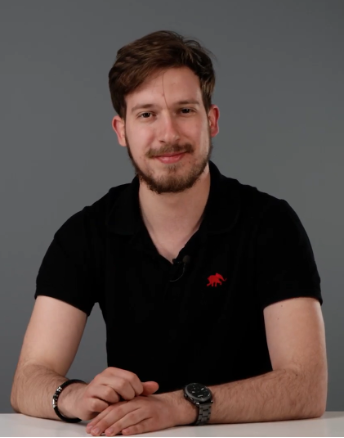
Ognjen Petrović, Junior Application Engineer, Typhoon, Serbia
Short Bio: Ognjen Petrović received the B.Sc. and M.Sc. degrees in Electrical Engineering and Computing from the School of Electrical Engineering, University of Belgrade, Serbia, with a focus on Power Engineering. During his master’s studies, he was awarded a national student scholarship by the Republic of Serbia in recognition of his academic excellence. In early 2025, he joined Typhoon HIL in Novi Sad, Serbia, as an Applications Engineer. He has been involved in projects applying hardware-in-the-loop (HIL) technology for grid modernization, as well as in the development of Typhoon HIL’s largest HIL teaching laboratory to date. In addition, he has delivered multiple tutorials, workshops, and webinars on HIL applications across various domains. His professional interests include power systems, smart grids, renewable energy integration, and power plant equipment.
Title: HIL for e-Mobility: Accelerating e-Drive Development from Design to Real-Time Testing
Electric powertrains and e-Drives are transforming how we design, test, build, and operate vehicles. Electric vehicles are powered by software, with Power electronics, control units, and communication systems playing a pivotal role in seamlessly integrating hardware and software. In this context, the design, development, and lifecycle maintenance of digital controllers have become increasingly complex. Traditional development approaches, often fragmented and siloed, are resource-intensive and prone to inefficiencies, late-stage issue discovery, costly design iterations, and integration challenges. Robust and continuous testing, enabled by specialized benches, real-time simulation, and advanced modeling tools, offers a future-proof response to these challenges. This workshop invites professors, students, and researchers to explore how Model-Based Engineering (MBE) and Hardware-in-the-Loop (HIL) testing streamline the design, validation, and implementation of control and optimization strategies for electric powertrains and e-Drive applications. The session will demonstrate how to move from offline simulation to real controller implementation while preserving model continuity across the development cycle. We will walk through the complete development workflow using Typhoon HIL’s Integrated Toolchain, emphasizing the use of MIL, SIL, and C-HIL simulation approaches, along with test automation, to enhance development efficiency. A practical example will be presented: starting with initial design in TyphoonSim™, progressing through automatic code generation for microcontrollers, and concluding with real-time validation using HIL testing. In addition to this, experience from previous Summer School lectures will be utilized during the hands-on part.
Friday, June 19th 2026
Davide Carniani, DEWESoft
Short Bio: Automotive Specialist and Technical Coordinator for the DEWESoft Italy Academy. Passionate about technical problem-solving and dedicated to making complex concepts easy to understand
Title: Electric Motor Bench Testing: A Practical Approach with DEWESoft
This session offers a hands-on experience dedicated to electric motor testing. Following a brief introduction to the DEWESoftX software for multiphysics signal analysis, the activity will shift entirely to experimental bench tests. Participants will actively engage with the instrumentation, managing the real-time acquisition of voltages, currents, and mechanical data via a torque meter. The session will conclude with data post-processing techniques, aiming to provide complete practical skills: from sensor acquisition to engineering data analysis.